.avif)
Meet life’s Most Essential Skills with Your Own Hands
For five days and four nights, we will gather in Sebastopol to slow down, work with elemental materials, and immerse ourselves in two of humanity's ancestral, fire arts: forging steel and cooking over fire.
Together we'll tend hearths, bake bread, simmer nourishing stews, prepare shared meals, shape hot metal, and experience the deep satisfaction of creating useful, beautiful things from earth, fire, water, grain, and steel. There is something profoundly reassuring in body and spirit about learning these skills.
At School for The Great Turning, we think of this as ‘Lifeways Literacy’
Recovering the practical knowledge, confidence, and ways of relating that have sustained human communities for thousands of years isn’t simply about survival skills or historical curiosities. They are invitations into a different relationship with the living world: one rooted in participation rather than consumption, and community rather than isolation.
Tangibly Experience the Work that Reconnects
Threaded throughout the week are teachings and practices from Joanna Macy's Work That Reconnects. Rather than learning these skills as an exercise in nostalgia, we'll explore them as living practices that help us cultivate resilience, gratitude, and belonging in a time that needs our participation.
As our hands learn ancient movements to apply to a modern world, we'll reflect on what it means to become people who can meet this moment with greater capacity, deeper connection, and a renewed sense of place within the larger community of life.
In this workshop, we'll explore the medium of steel…
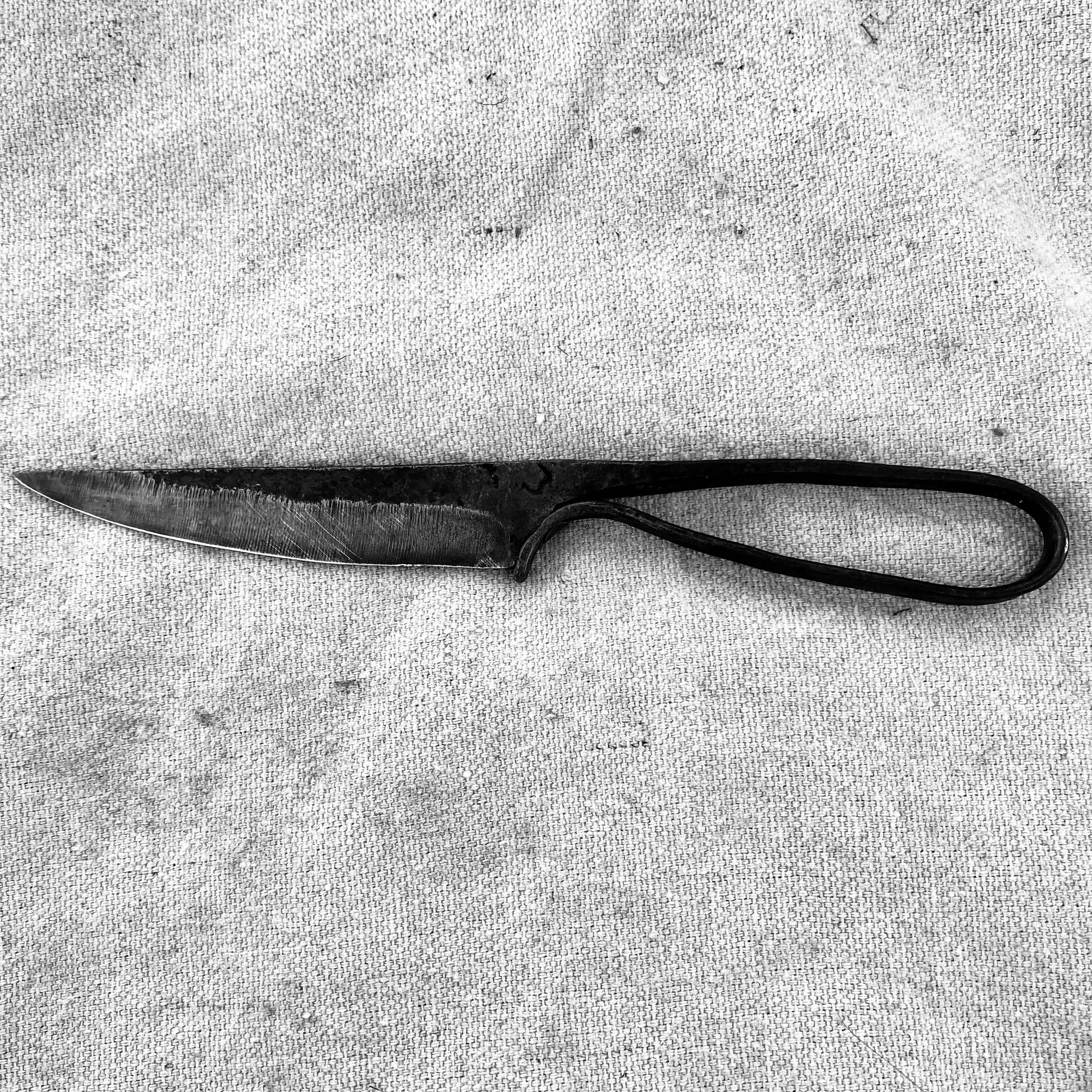
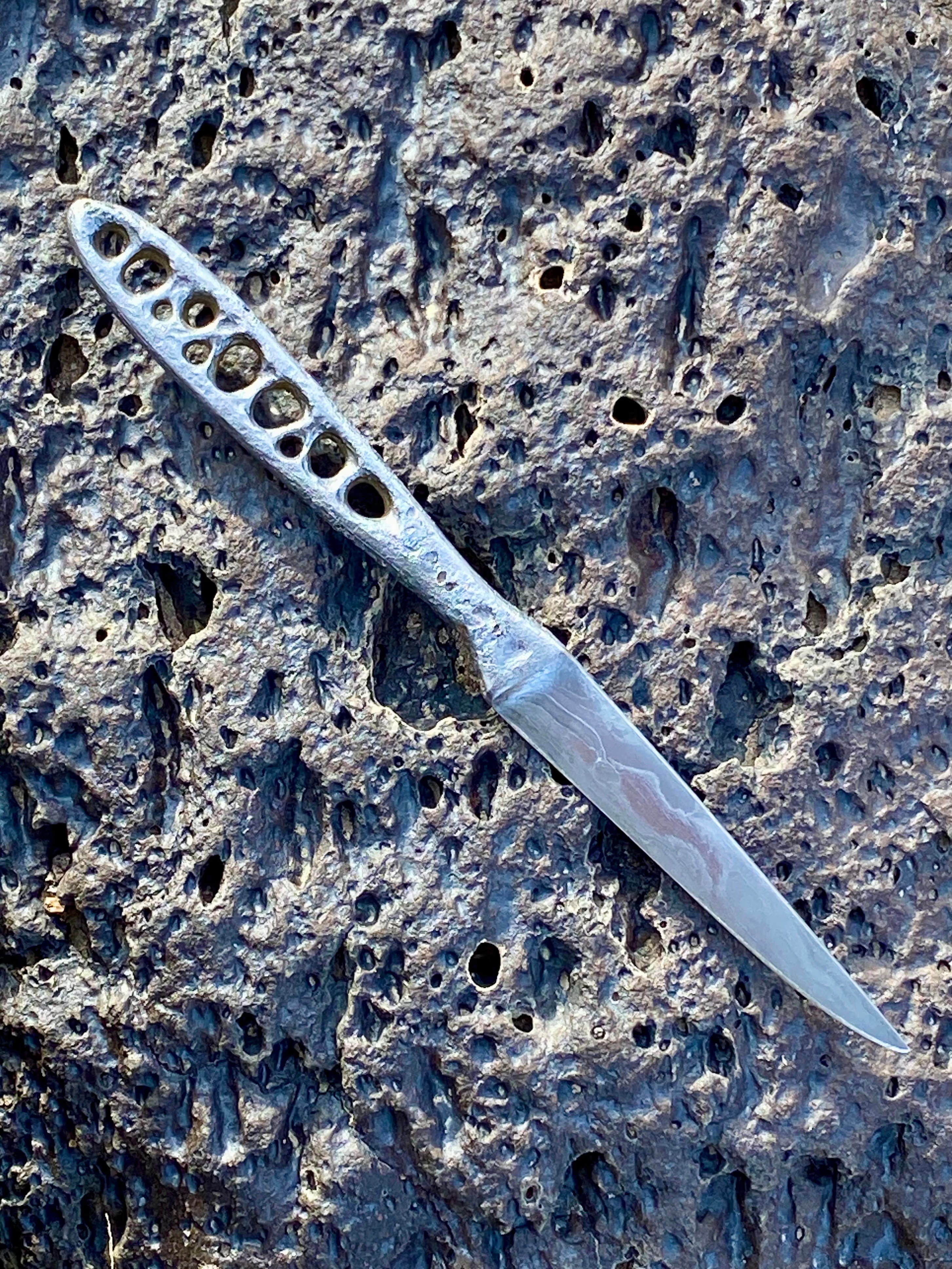
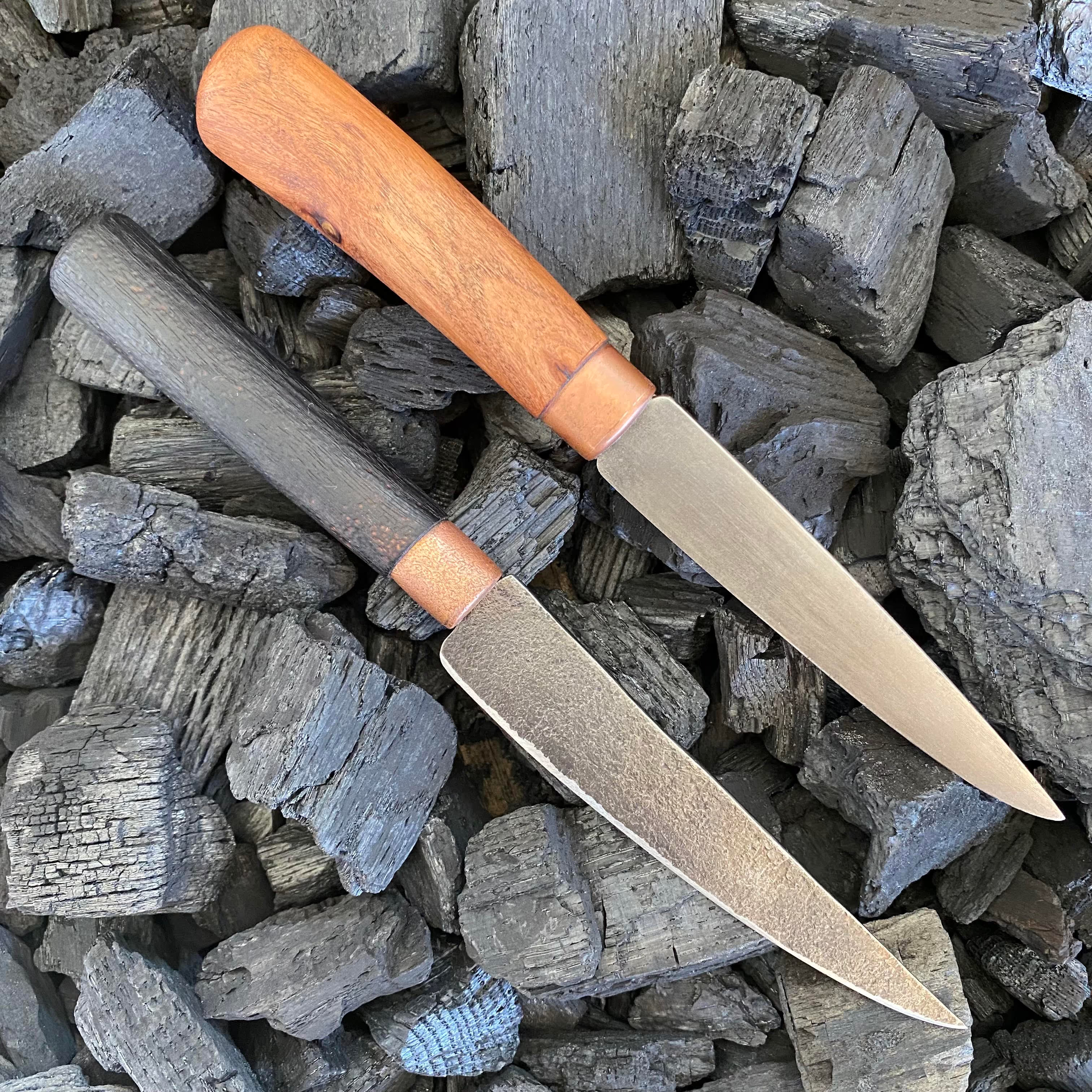
Through the process of creating a small personal utility blade or other forged tool. Yes, you will make your own tool.
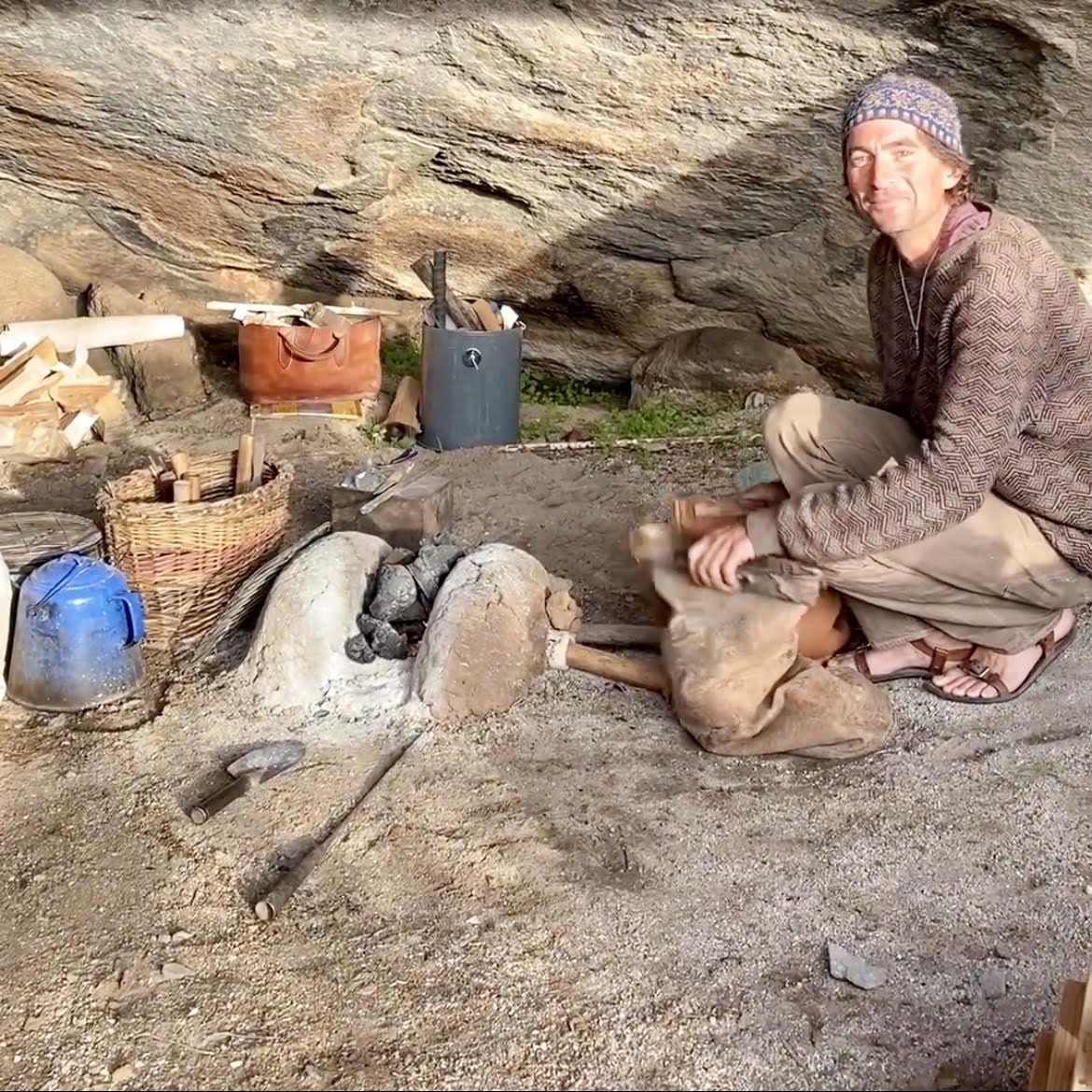
Steel has shaped human civilization for nearly three millennia, becoming one of the most commonplace materials in our lives. Drawing inspiration from the early Iron Age, appropriate technology, and the material cultures of communities living outside industrial systems, we'll forge steel in charcoal-fueled ground hearths, learning the fundamentals of shaping, sculpting, heat treating, and finishing metal by hand. Along the way, we'll explore the remarkable properties and history of steel, asking not only how it works, but what our relationship with tools can teach us about resilience, craftsmanship, and the lives we hope to build.
Around the Fire, We'll Make Our Meals Together
We will be making bread, simmering stews, tending the flames, and sharing the labor that has gathered humans around hearths for millennia.
Again and again, we'll return to the fire: to cook, to rest, to sing, to tell stories, to reflect. We often think of food as something we consume; this week, we'll remember it as something we create together.
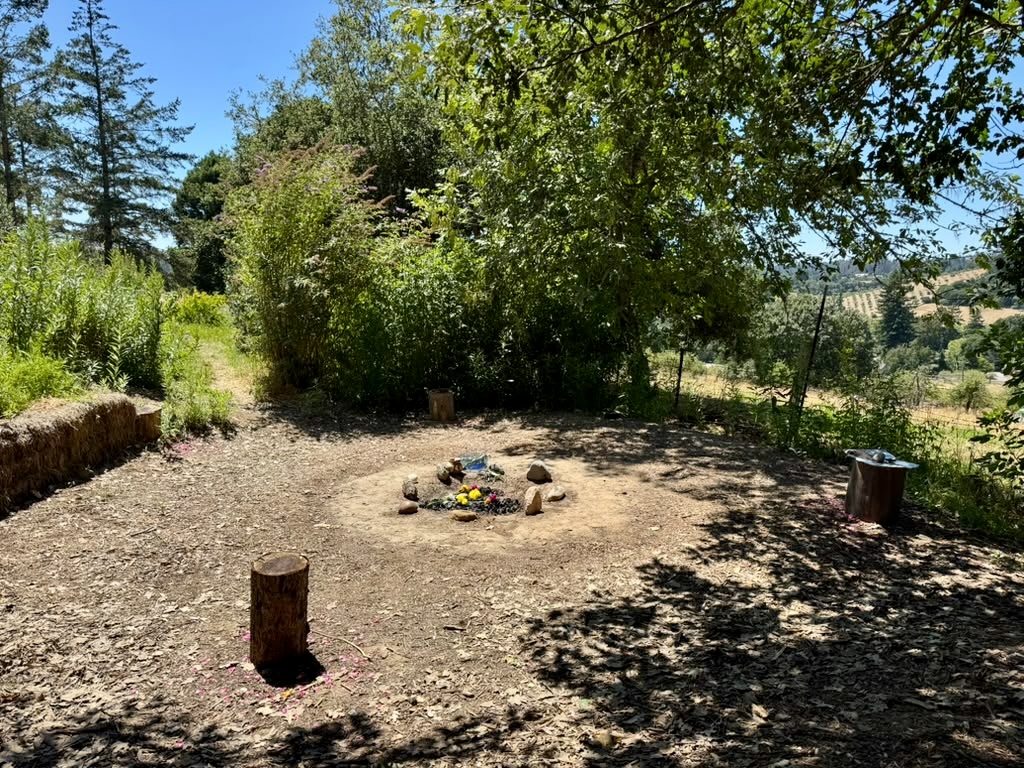
Our fireplace for the week is nestled in a food forest that includes species such as the Black Oak with its fortifying Acorn, Apple, Persimmon, Pineapple Guava, Pomegranate, and many medicinal, culinary, and magical herbs. There will be opportunities to experientially learn how to fortify the land in growing quality food by planting cover crops that revitalize the soul of the soil.
At School for The Great Turning, we think of this as ‘Lifeways Literacy’
Recovering the practical knowledge, confidence, and ways of relating that have sustained human communities for thousands of years isn’t simply about survival skills or historical curiosities. They are invitations into a different relationship with the living world: one rooted in participation rather than consumption, and community rather than isolation.
Tangibly Experience the Work that Reconnects
Threaded throughout the week are teachings and practices from Joanna Macy's Work That Reconnects. Rather than learning these skills as an exercise in nostalgia, we'll explore them as living practices that help us cultivate resilience, gratitude, and belonging in a time that needs our participation.
As our hands learn ancient movements to apply to a modern world, we'll reflect on what it means to become people who can meet this moment with greater capacity, deeper connection, and a renewed sense of place within the larger community of life.
In this workshop, we'll explore the medium of steel…
Through the process of creating a small personal utility blade or other forged tool. Yes, you will make your own tool.
Steel has shaped human civilization for nearly three millennia, becoming one of the most commonplace materials in our lives. Drawing inspiration from the early Iron Age, appropriate technology, and the material cultures of communities living outside industrial systems, we'll forge steel in charcoal-fueled ground hearths, learning the fundamentals of shaping, sculpting, heat treating, and finishing metal by hand. Along the way, we'll explore the remarkable properties and history of steel, asking not only how it works, but what our relationship with tools can teach us about resilience, craftsmanship, and the lives we hope to build.
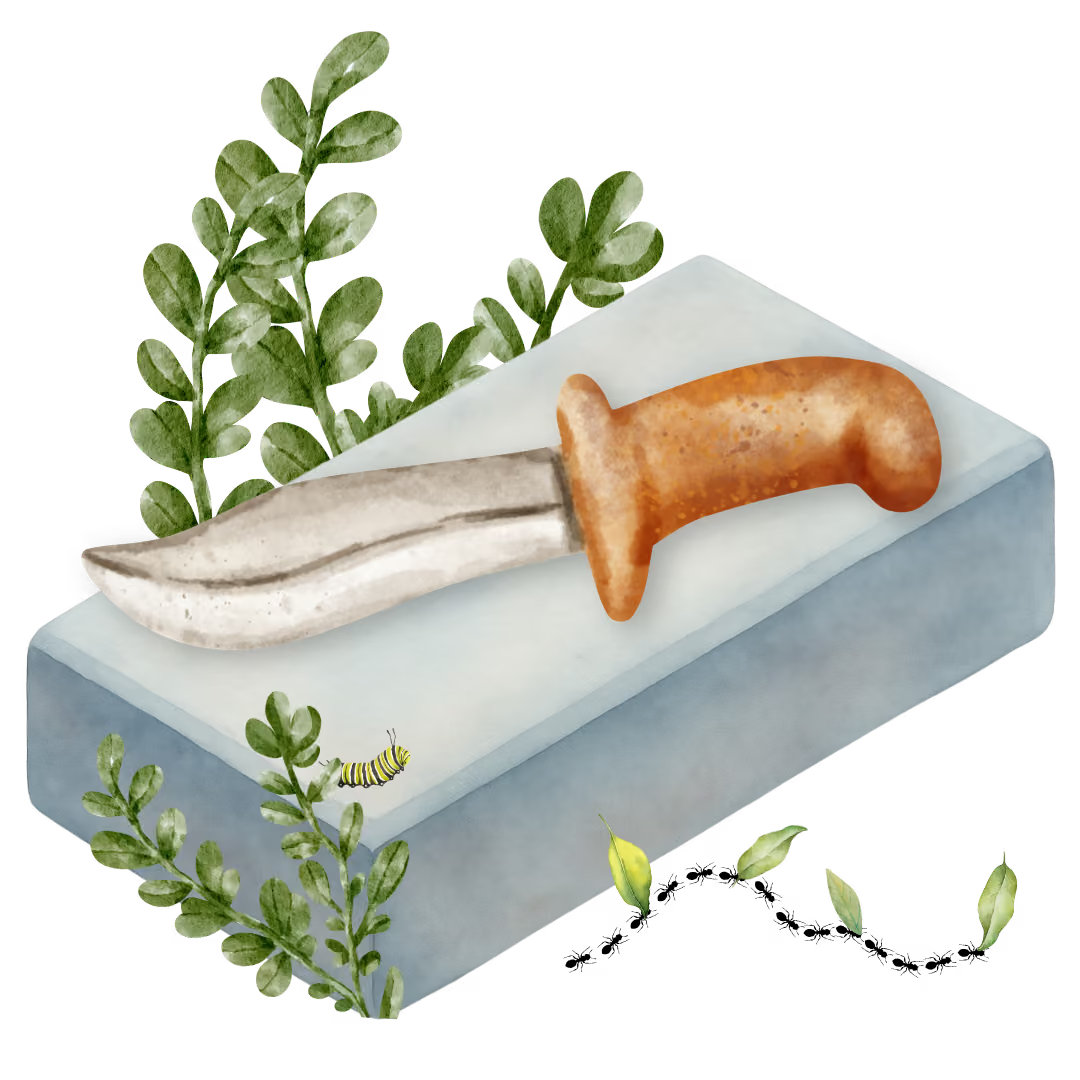
Around the Fire, We'll Make Our Meals Together
baking bread, simmering stews, tending the flames, and sharing the labor that has gathered humans around hearths for millennia.
Again and again, we'll return to the fire: to cook, to rest, to sing, to tell stories, to reflect. We often think of food as something we consume; this week, we'll remember it as something we create together.
Our fireplace for the week is nestled in a food forest that includes species such as the Black Oak with its fortifying Acorn, Apple, Persimmon, Pineapple Guava, Pomegranate, and many medicinal, culinary, and magical herbs. There will be opportunities to experientially learn how to fortify the land in growing quality food by planting cover crops that revitalize the soul of the soil.
This is not only a survival course, it’s an invitation to reclaim lifeways that cultivate resilience, beauty, and belonging.
Remember, humans have often gathered around fire, and becoming capable with our hands can calm an anxious heart.
Accommodations
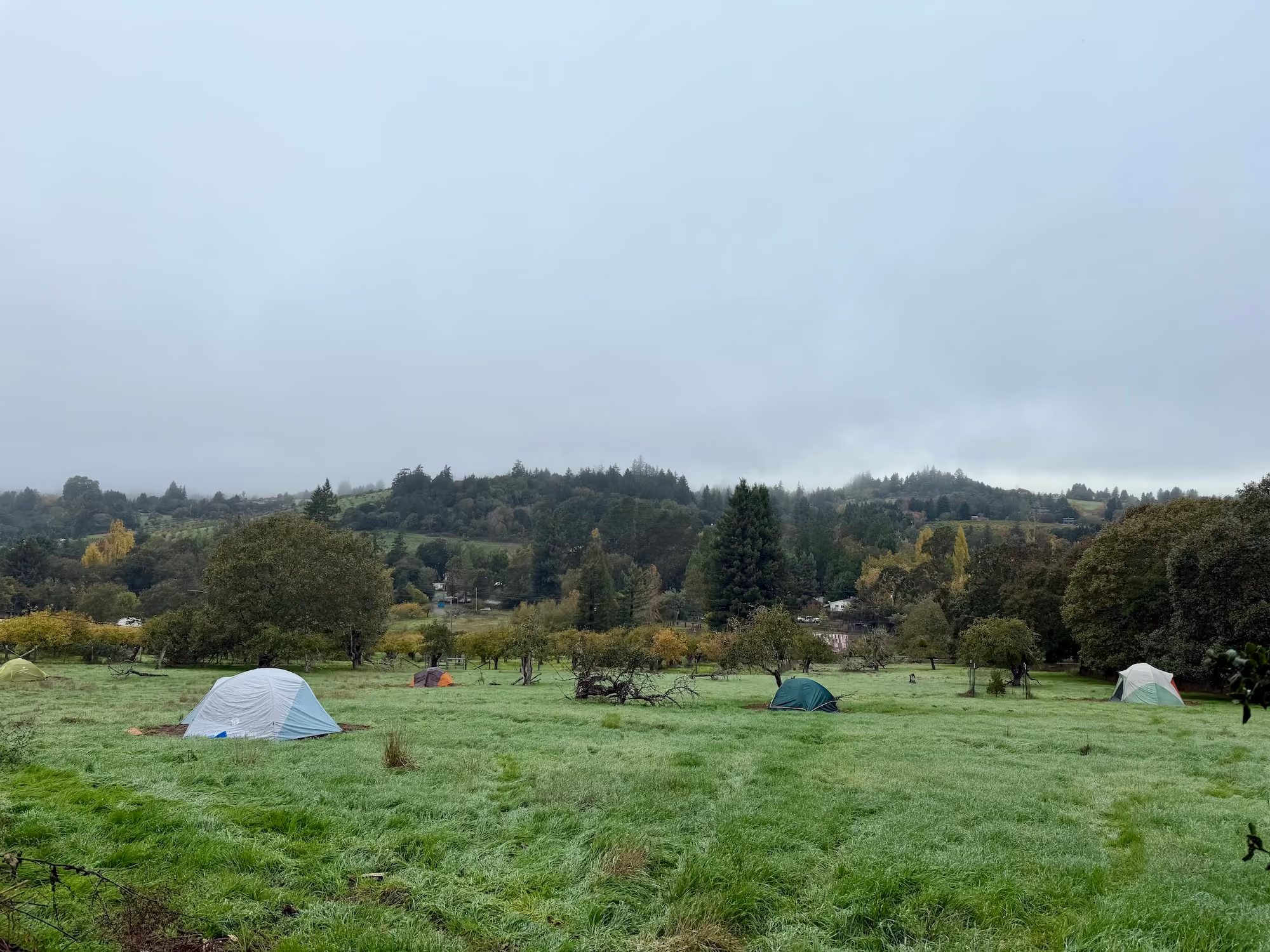
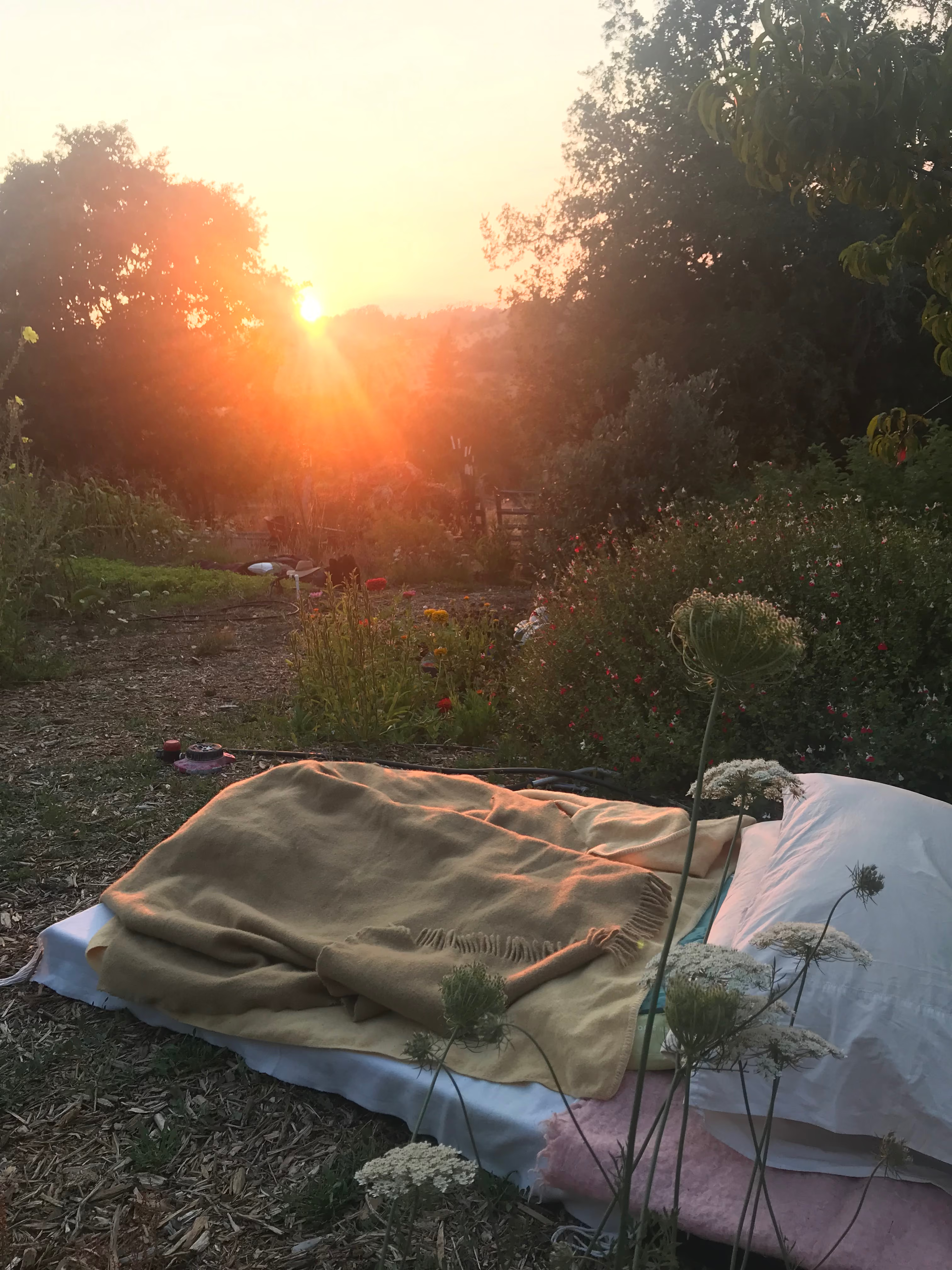
Onsite accommodations for Wednesday-Saturday nights are camping on the land, or we also have a non-residential registration option.
There are designated flat areas around the land and in the garden for you to lay out your bedroll and/or set up a tent.
We also encourage you to pack lightly and unpack everything from your vehicle when you arrive so that you can focus your energy on the land and your process and leave your vehicle and phone behind for the weekend. There is cell phone reception in the case of emergency or if you have something to tend to on your phone during the immersion.
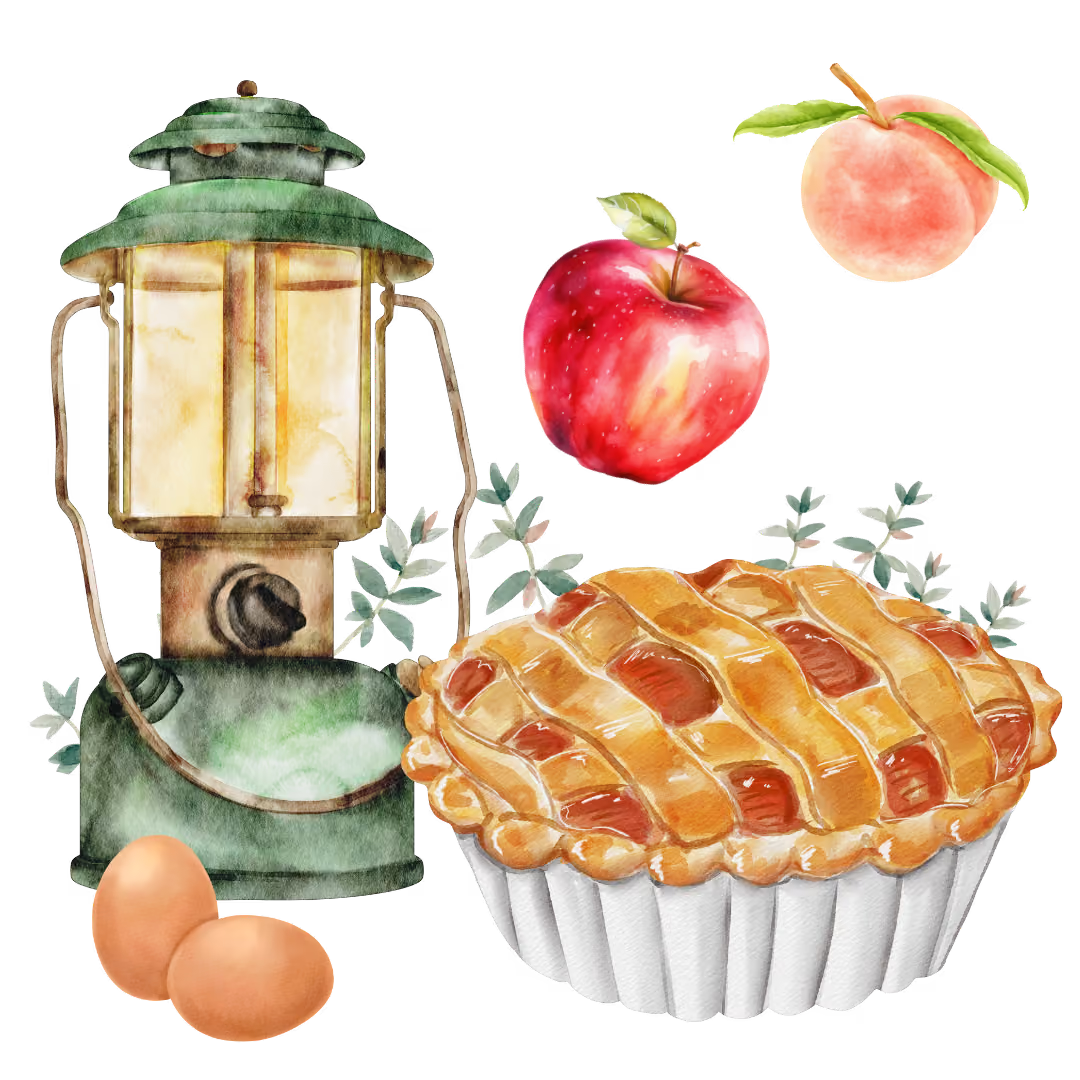
The Best Part: Food!
We’re making:
• Peach (or apple) crumble, flatbreads, stew, roasted vegetables, and whatever our experimentation creates!
We’ll provide:
• breakfast and dinner, and you’ll bring your own lunch
Schedule
Wednesday
• 4:00–6:00pm — Arrival and camp setup
• 6:00–7:30pm — Group catered dinner
• 7:30–9:00pm — Opening session
Thursday
• 9:00–11:30am — Morning session
• 11:30am–1:30pm — Lunch
• 2:00–5:30pm — Forging introduction
• 6:00–8:00pm — cooking with fire
Friday
• 9:00–11:30am — Morning land literacy session
• 11:30am–1:30pm — Lunch
• 1:30–5:30pm — Forging, cooking with fire
• 6:00–8:00pm — Dinner, community time
Saturday
• 9-11:30 — Morning land literacy session, forging
• 11:30am–1:30pm — Lunch
• 1:30–4:00pm — Final forging
• 4:00–5:30pm — Work That Reconnects / Integration
• 6:00–9:00pm — Community dinner, light ritual time together
Sunday
• 9:00–10:30am — Council integration / closing
• 10:30am–12:00pm — Closing land / site tending
Your Guides
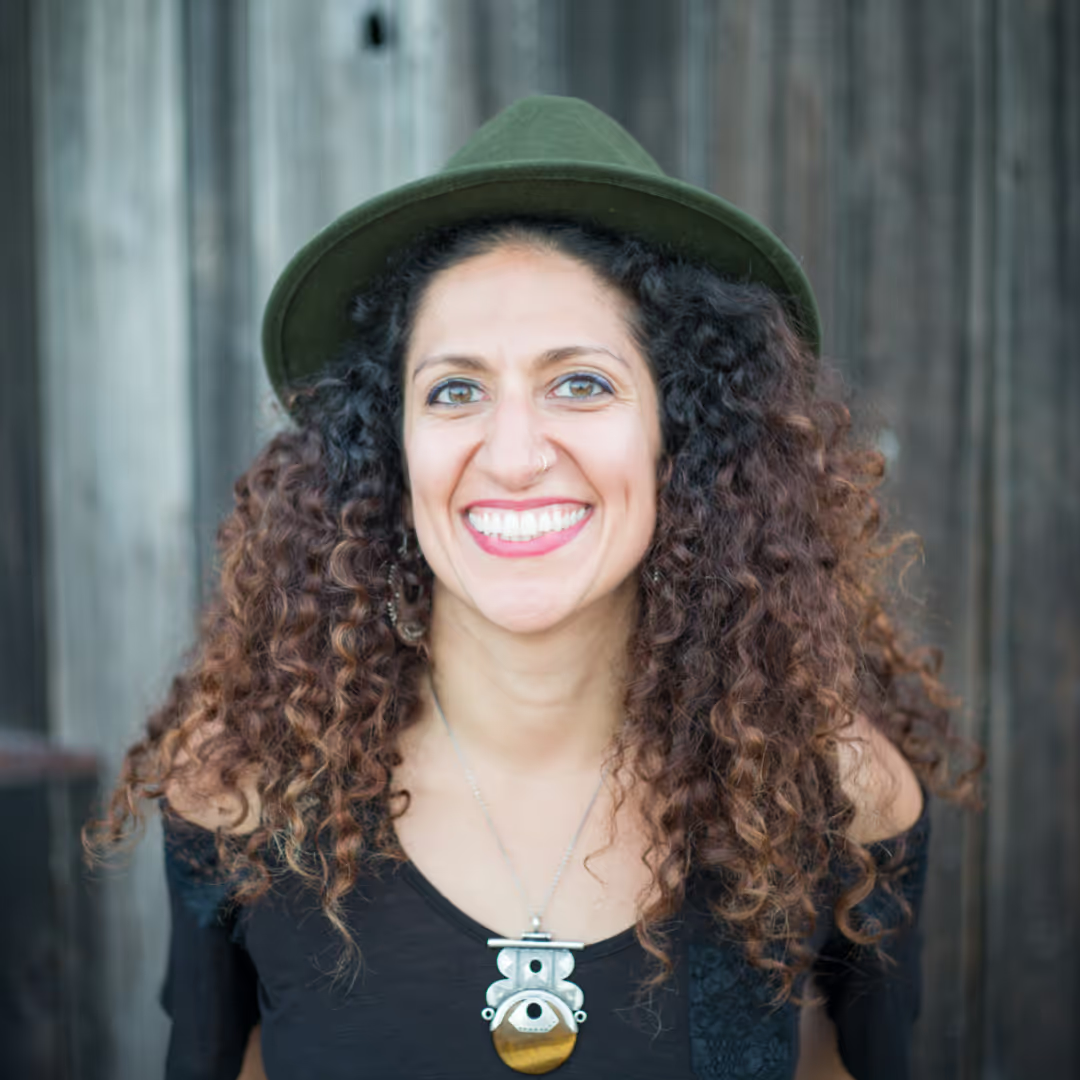
Lydia Violet
My journey to teaching this class began through studying ancestral skills with Weaving Earth, where I discovered the possibility and impact of an education that intersects land-based learning, emotional attunement, and political relevance. In April of this year, two months after the war in Iran began, I attended Buckeye Gathering carrying a tremendous amount of grief and rage as an Iranian American. Even though I'd never forged a blade before, I felt called to the forge, and Bryce held such a grounded, supportive space that the work of tending the fire and shaping steel became a way for me to begin moving through what I was carrying. That experience showed me that forging over fire is more than a practical skill, I can also be a practice of presence, resilience, and transformation. That's what inspired me to create this class with Bryce and Kari.
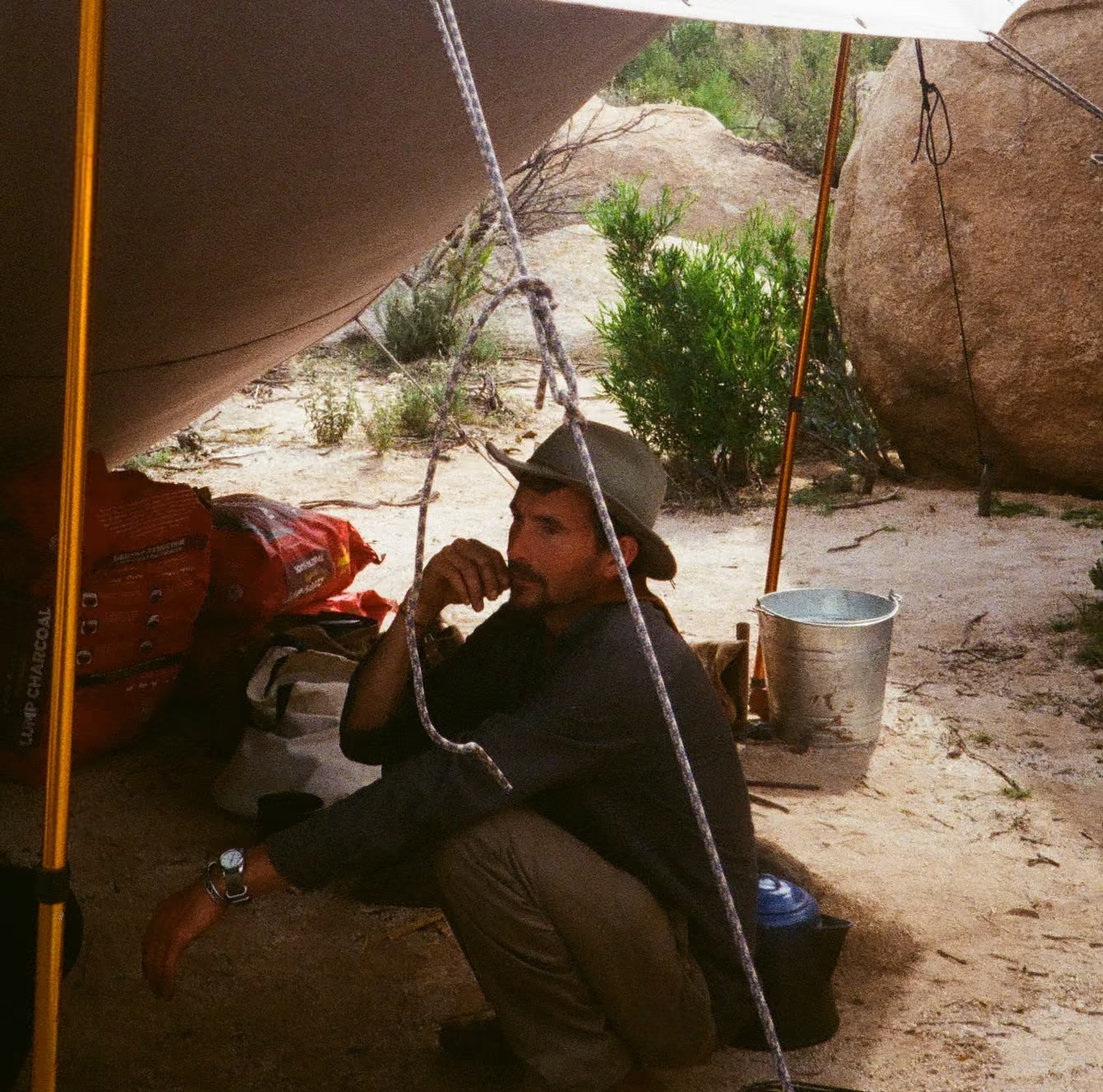
Bryce Wood
Has been studying and sharing his enthusiasm for blade smithing for thirty years. He brings a unique low-tech approach to blacksmithing that emphasizes the use of hand tools and the virtues of simplicity as he guides students through the process of making a knife. When not writing bios about himself, he enjoys living off-grid, making stuff, cooking, playing down at the river, beach combing, dancing, and Surfskating.
Kari Stettler
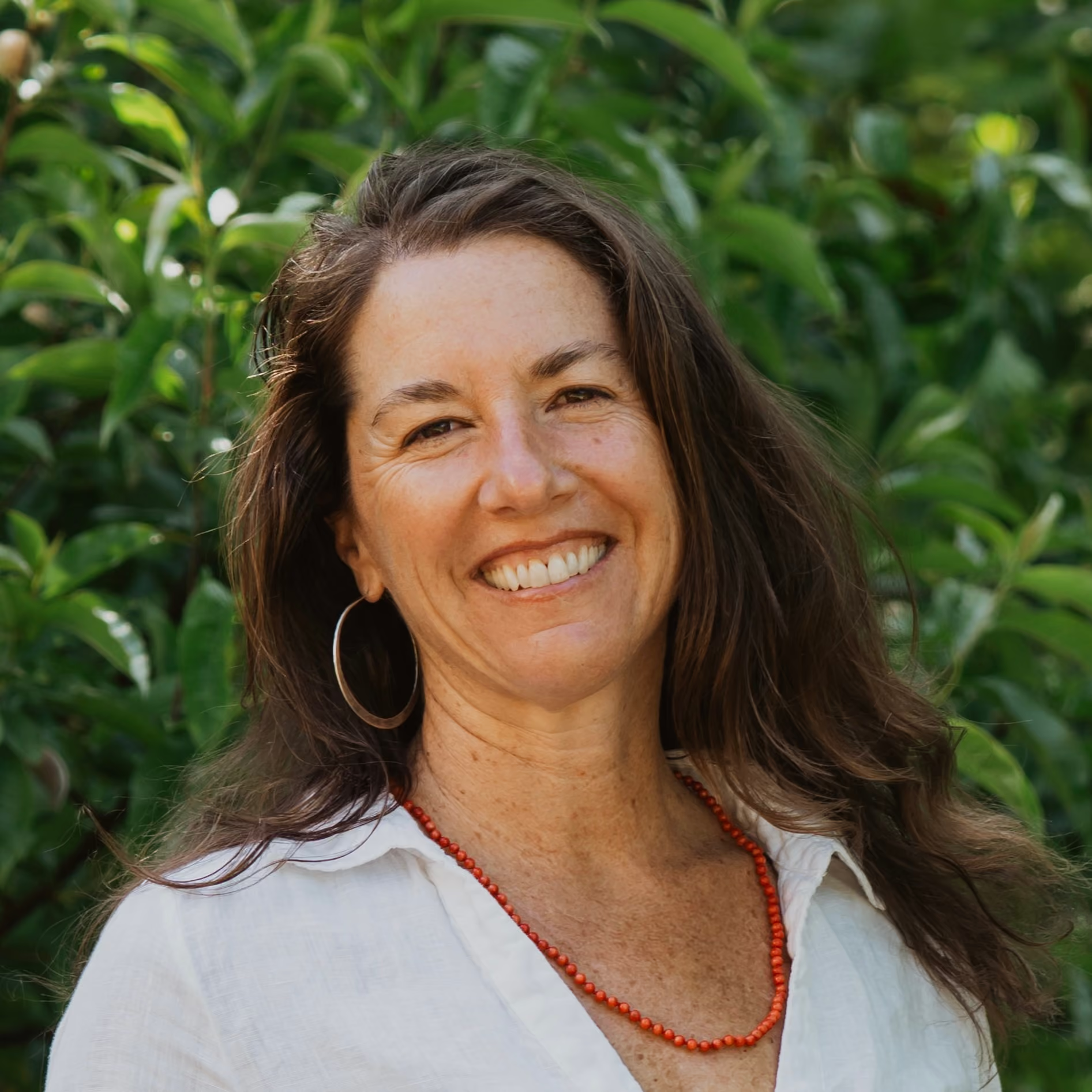
(she/her) is a somatic educator, Work That Reconnects facilitator, initiatory guide, and land steward of Gold Ridge gardens, where we will gather for Bake & Blade. Tending this garden since 2011, she explores the ecotone between the cultivated and the wild, curating spaces for intimacy, enchantment, re-membering, and deep ecological embodiment. Her presence invites participants to slow down, listen deeply, and experience the craft of tending the hearth and shaping the earth with reverence and attunement.
Register Now
Registration closes Oct 28 or until all 12 spots are filled
Staying onsite
$1300
Pay in full or subscribe to a payment plan $650 x 2 months
Staying offsite
$1100
Pay in full or subscribe to a payment plan $550 x 2 months
Want to help someone else attend? [Support a scholarship spot]
Partial Scholarship Spots Available
Financial constraints shouldn't be what keeps you from this circle.
FAQ
What happens if it rains?
Bake & Blade is designed to be an outdoor, hands-on experience. Light rain won't stop us! We'll have tarps and other shelter in place so we can continue gathering, forging, and cooking together.
In the case of heavy or sustained rain leading up to or during the event that makes it unsafe or impractical to continue, we'll reschedule Bake & Blade and give registered participants the option to transfer their registration to the new dates or receive a refund.
Do I need any prior experience with blacksmithing or fire cooking?
No experience necessary. This is designed as an entry point into these lifeways, not a course for people who already forge or cook professionally.
What will I actually make?
You'll forge your own small utility blade or tool from raw steel, learn to heat treat and finish it, and take it home with you. You'll also help prepare communal meals over fire throughout the week, including bread, stew, and other dishes made from scratch.
What's included in the price, and what's not?
Your tuition covers materials for the blade, tool use, breakfast, dinner, ingredients for baking.
Where will I sleep?
Onsite camping is available Wednesday through Saturday nights. There are flat areas for tents or bedrolls scattered around the land and garden.
What should I bring?
Bring camping supplies! Tent/bedroll, weather-appropriate clothing, closed-toe shoes for forge work, water bottle, work gloves, headlamp…a more detailed packing list will be shared closer to the date, and after registration.
Is this physically demanding?
This type of forging involves sitting, hammering, and working near heat for periods of about 1-3 hours. You will have ample time for breaks, stretching, and taking a break from the fire, but you do need to be able to be working by the ground forge for about 2-3 hours a day.. Cooking over fire will be shared by the group, and we will flow with the energy the group has, passing around labor and ultimately held by our teachers.involves similar physical engagement. The walk from your car to your camping spot will be anywhere from 2-300 feet, and same for the walk from our gathering area back to your camping spot.
What about cell service and unplugging?
There is cell reception onsite for emergencies, but participants are encouraged to leave devices behind and stay present with the land and group for the weekend.
Is this safe?
From our teacher, Bryce Wood:"To maintain a safe work environment, we will be slowing down and approaching our work with a collective eye toward process over product. We will listen to our bodies, we will stay centered, we will explore the medium with care, the ways in which it is capable of moving, listening deeply, dancing with it, learning how it can be coaxed and where there is resistance. The use of natural fiber clothing and the use of safety glasses is necessary for protection from sparks. All art, craft and physical activities convey some risk, however, it is my belief that when approached respectfully this is a relatively safe craft that can yield a lifetime of exploration and possibilities.
Can I bring my kids, partner, or pet?
There are two cats on the property, so no additional animals will be allowed. Kids 12 and up can be approved to participate.
What if I need to cancel?
Full refund up to 45 days from start date, 50% refund up to 14 days beforehand.
Is there a scholarship or sliding scale?
Yes. There's an option to contribute to a scholarship fund for participants who need financial support. Because the registration cap is so small, we only have space for 2 partial scholarships. They'll probably go pretty fast. Here's the application